Coming Home: But Did He Ever Leave?
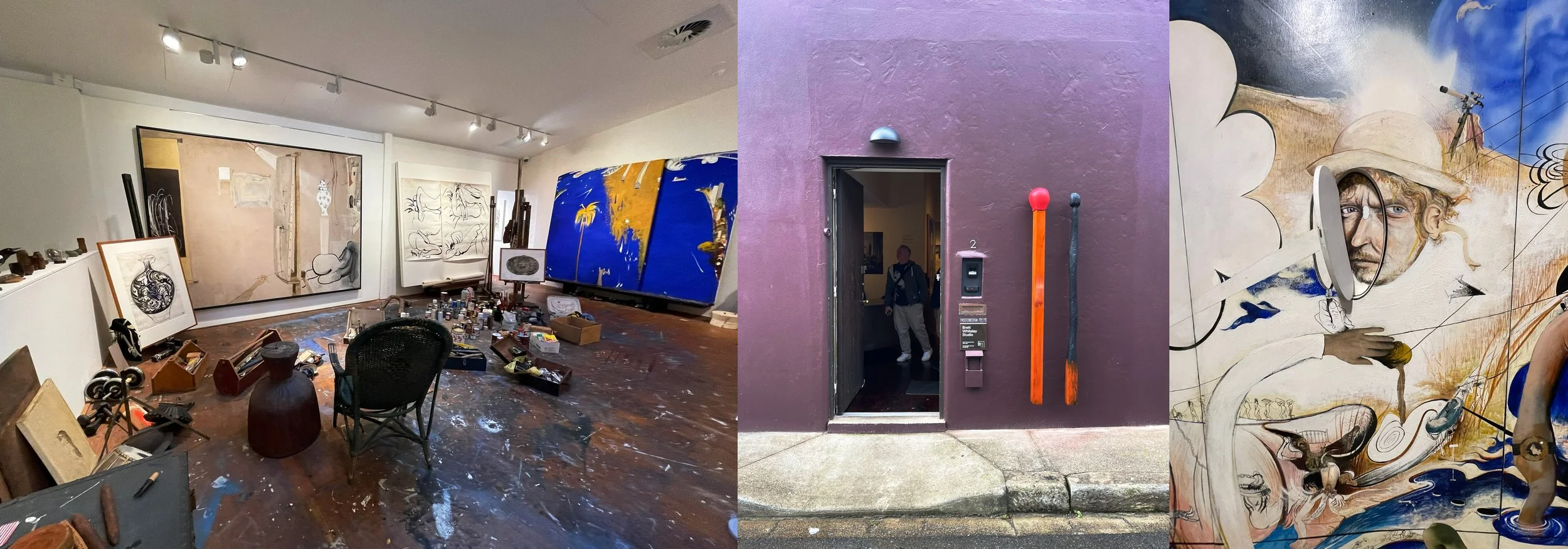
Coming Home | Brett Whiteley Studio 2 Raper Street, Surry Hills NSW
There are exhibitions that revisit the past, and then there are exhibitions that quietly remind us the past has never really disappeared.
The reopening of the Brett Whiteley Studio in Surry Hills, following an extensive restoration, is one such occasion. Together with Coming Home, the exhibition presented across the Studio and the Art Gallery of New South Wales, visitors are invited to reconsider Whiteley's return to Australia during the 1970s, a period that would produce some of the defining works of his career. Yet it was only after leaving Raper Street that I began to wonder whether the exhibition's title carried another meaning altogether.
Perhaps the real question is not how Brett Whiteley came home, but whether he ever really left.
I arrived shortly after 9.30am, imagining an early start might offer the opportunity to experience the exhibition before the crowds arrived. Instead, the building was already alive with visitors attending a special preview organised through the Art Gallery of New South Wales. Thinking I had simply misjudged the timing, I returned again when the doors opened to the general public at 10.00am. The galleries remained just as full. More than three decades after his death, people were still queuing to spend time with Brett Whiteley.
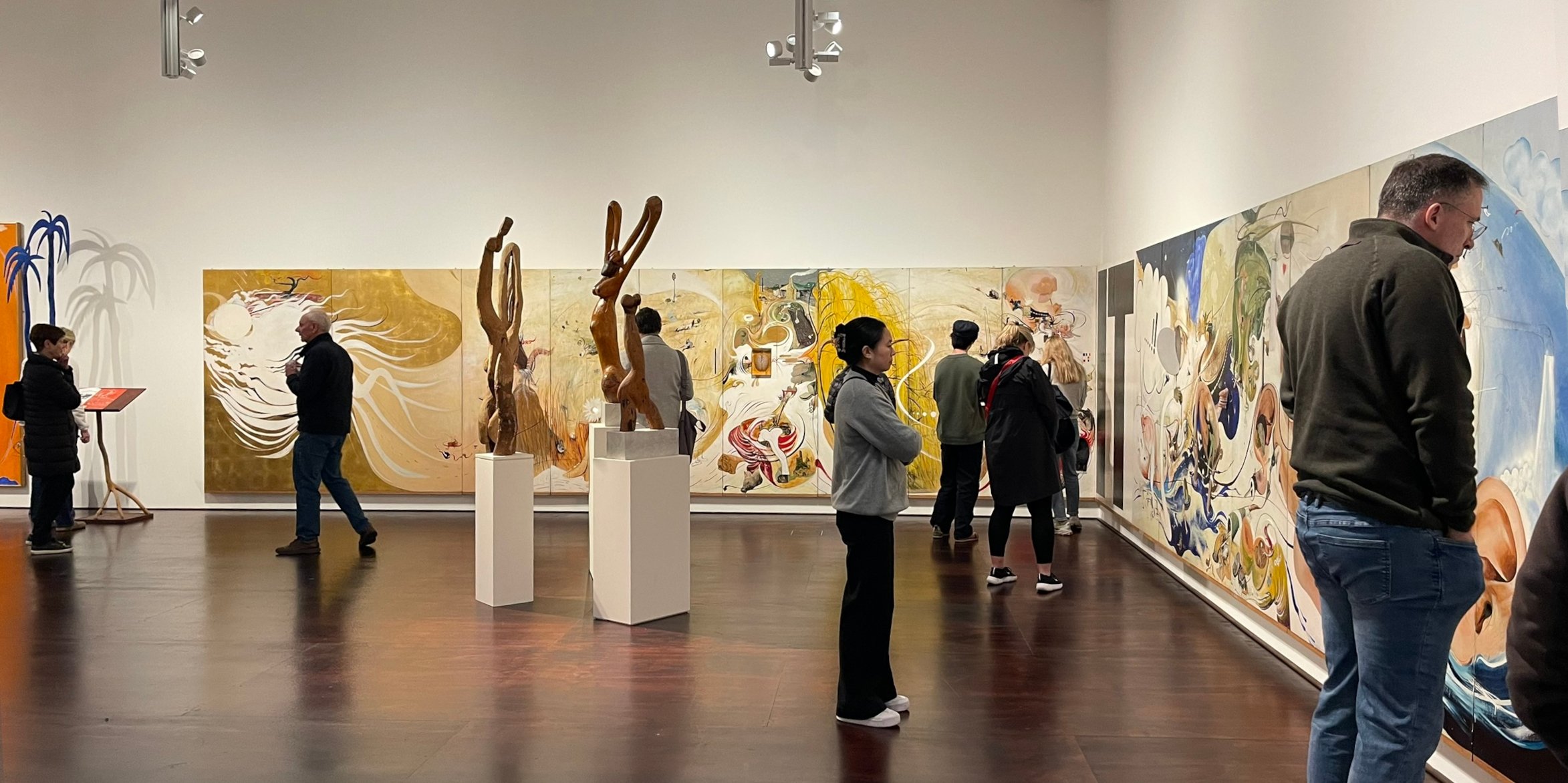
The experience unfolds across two distinct yet inseparable spaces. The exhibition occupies the ground floor, presenting Whiteley's work through the considered lens of the curator. Upstairs, the preserved studio offers something entirely different. It is neither another gallery nor simply a reconstruction, but the place where many of the ideas encountered below first entered the world. Seen together, the two spaces complete one another. The exhibition reveals the finished works, while the studio reveals something of the restless imagination that produced them.
Climbing the narrow staircase, I was struck by how little the room felt like a museum. Instead, it possessed the quiet intimacy of a place that had been momentarily interrupted rather than abandoned. Tubes of oil paint remain scattered across the floor, brushes lie where they were last placed, and canvases lean casually against the walls, some appearing to await the final decision that would carry them from possibility into completion. Nothing feels arranged for effect. The studio retains the untidy rhythm of genuine creative practice, where ideas were pursued with urgency rather than carefully preserved for posterity.
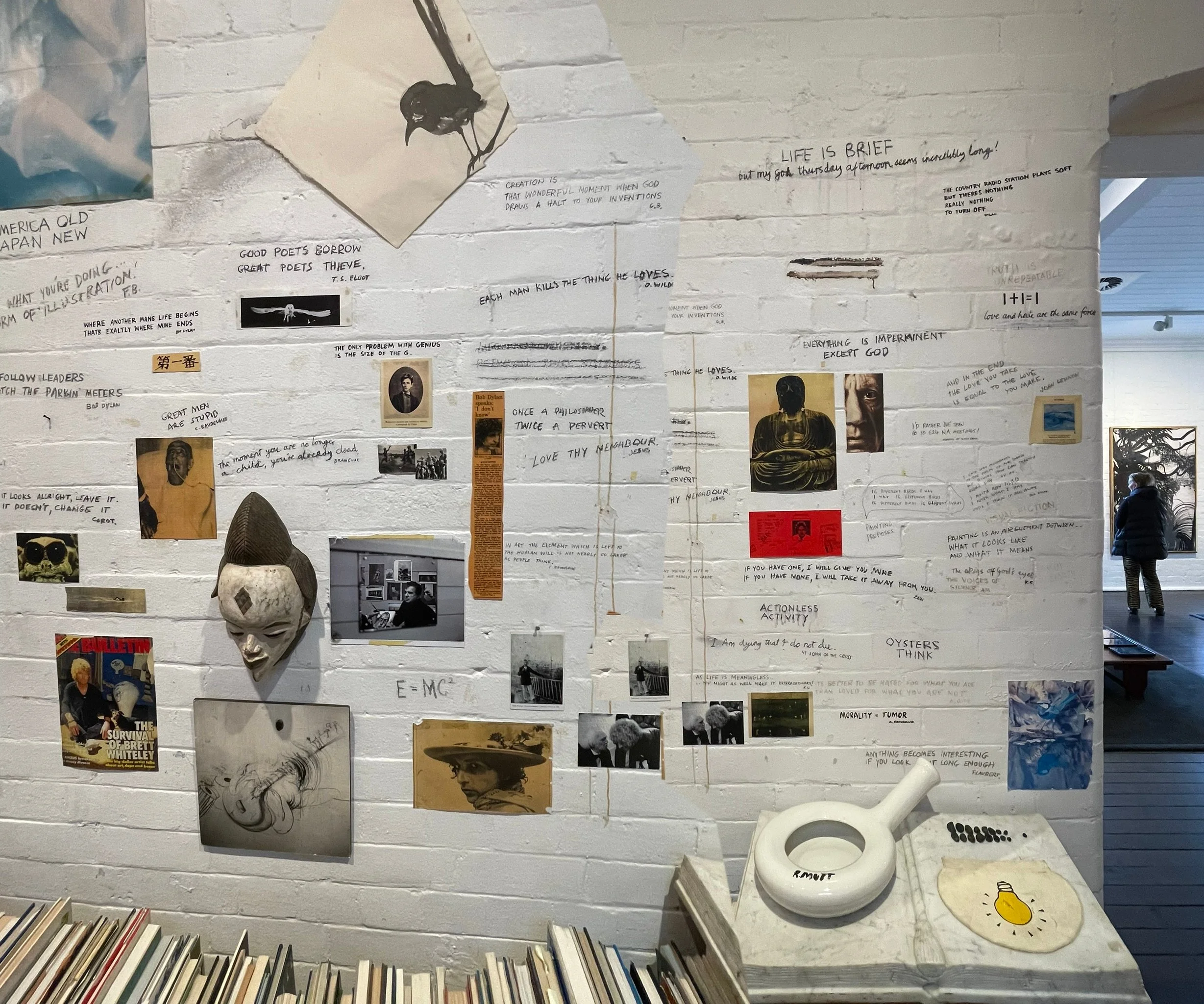
The walls of the studio are perhaps its most revealing feature. Rather than functioning as decoration, they read like fragments of an ongoing conversation. There are photographs of Francis Bacon standing in his own studio, an image of Salvador Dalí late in life with a feeding tube extending from his nose, portraits of Picasso, a photograph of Buddha and handwritten quotations scattered among them. Above Dalí appears the phrase, "Great Men Are Stupid," attributed to Baudelaire. Nearby, another inscription reads, "Everything is Impermanent except God." None of these pairings are explained, nor should they be. They speak of an artist wrestling not simply with painting, but with ambition, mortality, spirituality and the uneasy burden of artistic greatness. Walking around the room, I realised I wasn't simply looking at the influences that informed Whiteley's paintings. I was looking at the ideas, artists and philosophies that shaped Whiteley himself.
Returning downstairs, I found myself looking differently at the exhibition. Several of the paintings hanging before me were works I had known for years, but only through exhibition catalogues, gallery magazines and documentaries. Like many people interested in Australian art, I had lived with reproductions of these paintings long before encountering the originals. Seeing them in person was a reminder that great paintings always possess something photography cannot reproduce. Scale, surface, rhythm and presence resist translation. They have to be experienced.
Alongside these celebrated paintings sit Whiteley's works on paper. More intimate in scale, they nevertheless possess an extraordinary immediacy. The sweep of charcoal, the confidence of an ink line and the effortless movement of a loaded brush reveal an artist thinking directly through his hand. After standing in the studio above, these drawings no longer seemed secondary to the paintings surrounding them. Instead, they became the first visible moments of creation itself.
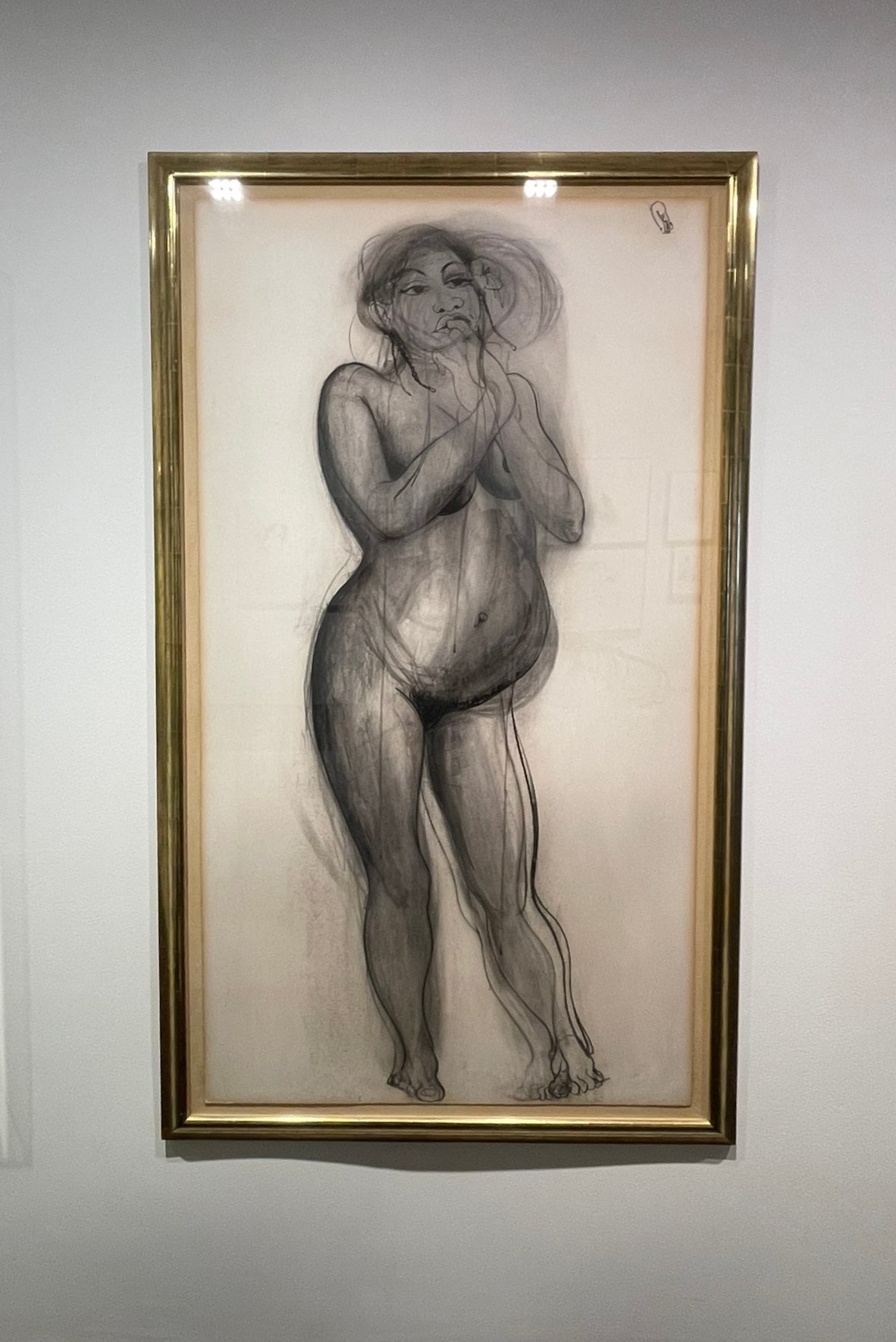
Watching those marks emerge across the paper, I found myself thinking of Giorgio Vasari and his concept of disegno, the Renaissance belief that drawing is the foundation of artistic creation, the moment an idea first enters the material world. Beyond Vasari lies the older Greek notion of Aether, the invisible and divine medium from which all creation emerges before assuming physical form. Whether consciously or not, Whiteley's drawings seem to exist on that threshold. They preserve the fleeting instant when imagination leaves the unseen realm and becomes line, gesture and ultimately art. It is perhaps in these works, more than anywhere else, that one comes closest to witnessing the mystery of artistic invention.
Leaving the Studio, the exhibition's title continued to linger. Coming Home clearly refers to Whiteley's return to Australia and to the reopening of the studio that became synonymous with his artistic life. Yet, after moving through the exhibition and standing in the preserved workspace above, I found myself reading those words rather differently. Perhaps the more interesting question is not how Brett Whiteley came home, but whether he ever really left.
His presence remains visible not only in museums and public collections, but throughout the Australian art market. Over the past five years alone he has repeatedly ranked among the country's highest grossing artists at auction, leading the Australian secondary market in 2023 and 2024, and once again in 2026 to date, while remaining among the top-ranked artists in every intervening year. Those results are not driven solely by the occasional multi-million-dollar masterpiece, although paintings such as Henri's Armchair, The Wren and Yellow continue to establish remarkable benchmarks.
What distinguishes Whiteley from almost every other Australian artist is the extraordinary depth of his market. Since auction records began, more than 2,700 works have changed hands publicly, generating in excess of $220 million in sales. That level of sustained activity is remarkable in itself, but perhaps more significant is the composition of that market. While museum-quality paintings command prices measured in the millions, a steady stream of unique works on paper continues to circulate through Australia's leading auction houses, providing collectors with the opportunity to acquire original works by one of the nation's most celebrated artists while reinforcing confidence in an active and remarkably resilient secondary market.
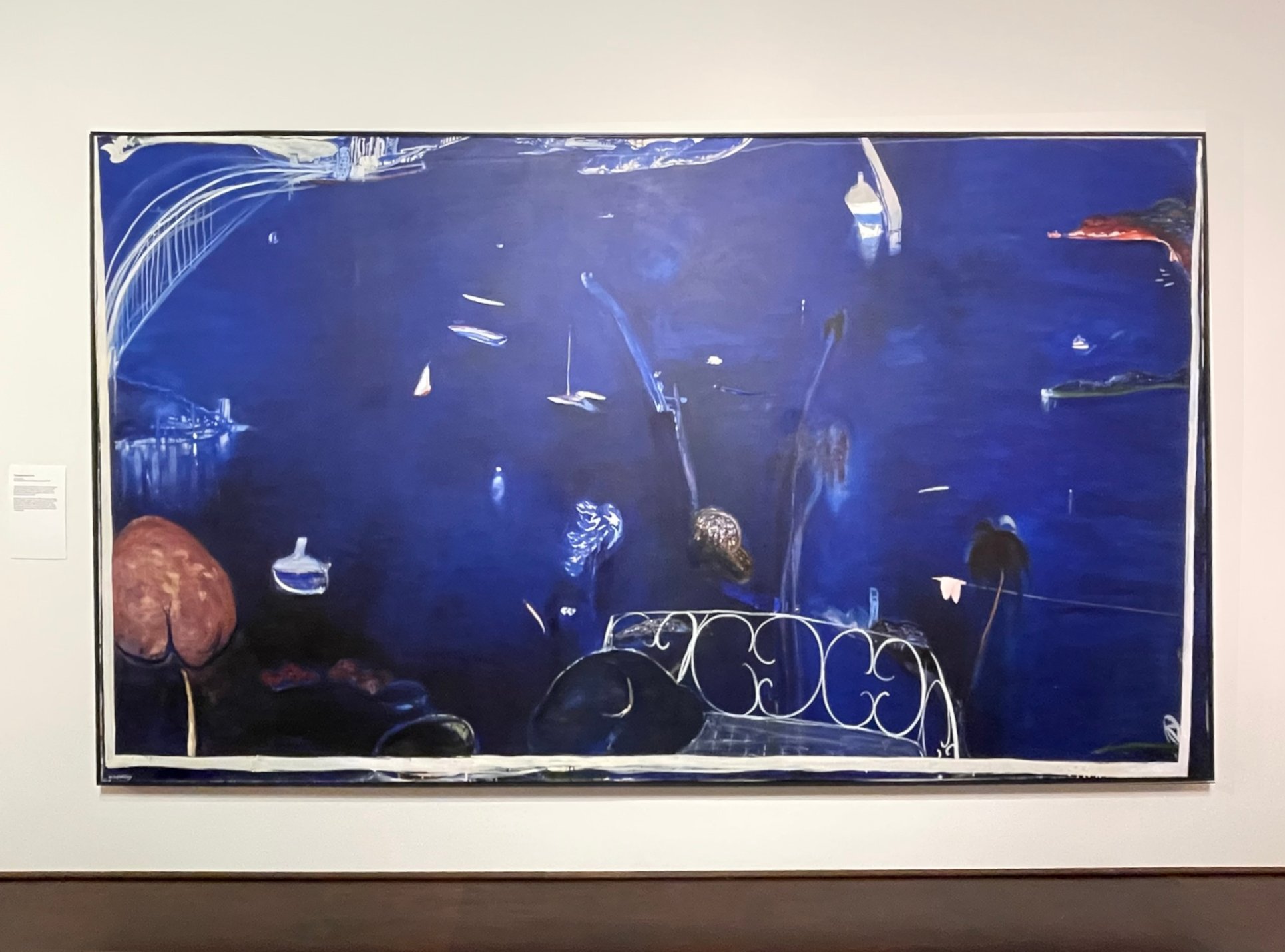
Brett Whiteley, The Balcony, 1975. One of the defining paintings of Whiteley's celebrated harbour series, now held in the collection of the Art Gallery of New South Wales.
Few Australian artists have achieved that balance. The great paintings establish Whiteley's place within Australian art history, while the drawings, watercolours, charcoals and mixed-media works ensure that his presence continues to circulate through galleries, auction rooms and private collections with remarkable regularity. Together they create a market that is not simply valuable, but enduring.
Perhaps that is the greatest success of Coming Home. It is not merely an exhibition about Brett Whiteley's return to Australia, nor simply the reopening of one of Sydney's most significant artistic landmarks. It is a reminder that truly influential artists never belong entirely to the past. They continue to shape the way we see, the way we collect and the way we understand our own cultural history.
As I walked back onto the streets of Surry Hills, I realised the exhibition's title was asking a question rather than making a statement. Coming Home is not simply about Brett Whiteley's return to Australia during the 1970s, nor solely about the reopening of the studio that shaped so much of his artistic life. It is a reminder that the measure of a great artist is not the date of their death, but the extent to which their work continues to live within a culture. By that measure, Brett Whiteley has never really left Australia's cultural imagination.
Exhibition Information
Coming Home
Brett Whiteley Studio
2 Raper Street, Surry Hills NSW
Dates: 31 July 2026 – 15 February 2027
Admission: Free
Opening Hours: Wednesday to Sunday, 10.00 am to 4.00 pm