Beyond the Valuation: Encountering Country at Ngura Puḻka: Epic Country
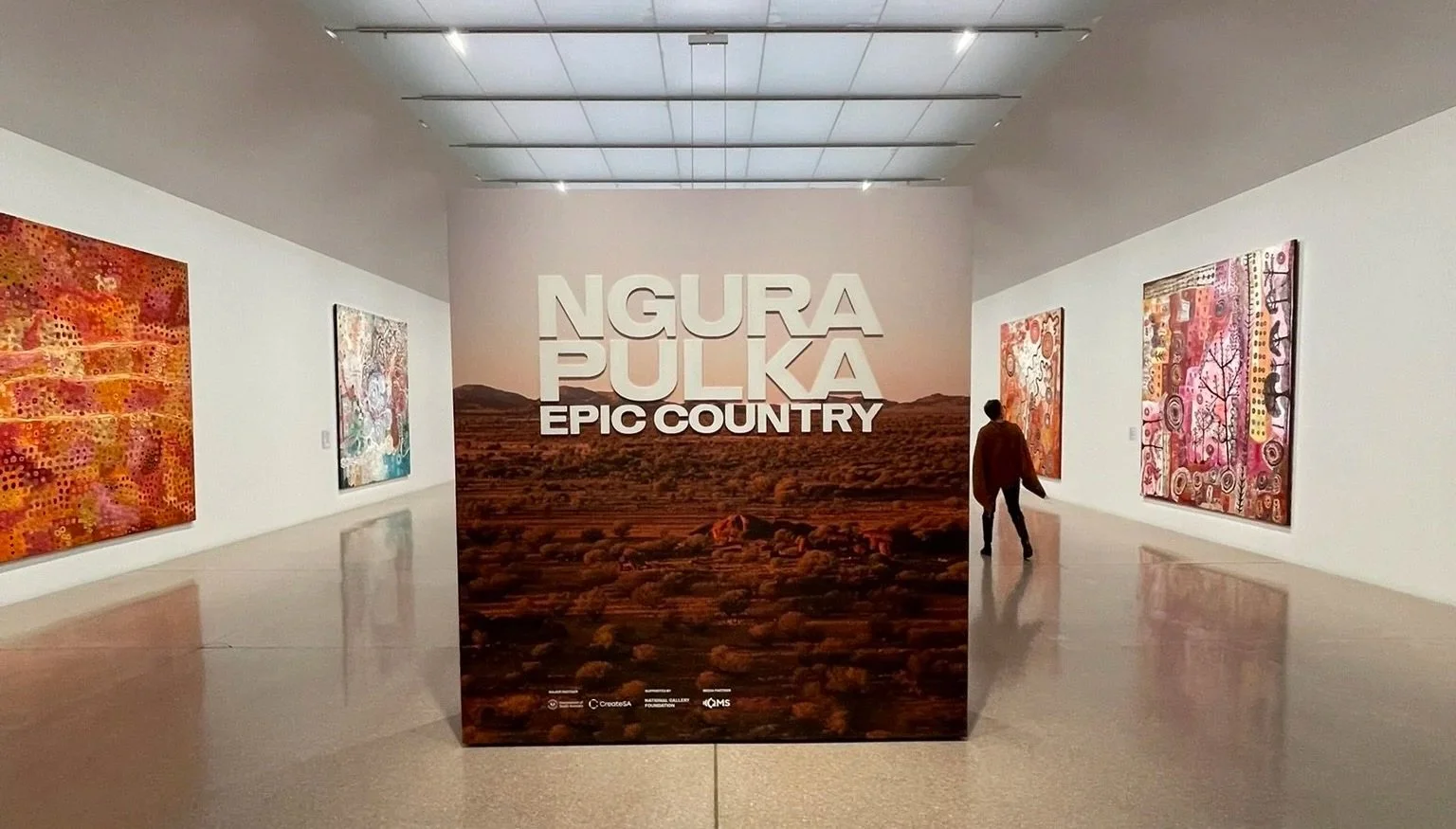
Having recently completed an extensive series of valuations of Indigenous Australian paintings, I found myself wanting to spend more time beyond the provenance records, exhibition histories and market research that had occupied my desk for weeks. The timing could not have been better. With the National Gallery of Australia presenting Ngura Puḻka: Epic Country, one of the most significant exhibitions of contemporary Indigenous Australian art in recent years, it seemed the ideal opportunity to revisit the work of many of Australia's leading Indigenous artists and, more importantly, to deepen my understanding of the cultural traditions, histories and connections to Country that underpin their practice.
Valuations require careful analysis of an artwork's history, authenticity and market position. Exhibitions such as Ngura Puḻka, however, offer something equally valuable. They provide the opportunity to step back from the mechanics of the art market and simply experience the work on its own terms.
Ngura Puḻka, meaning "Great Country" in Pitjantjatjara, brings together more than 200 works by over 100 Aboriginal and Torres Strait Islander artists from across Australia. Drawn largely from the National Gallery's collection, the exhibition celebrates the extraordinary diversity of Indigenous artistic practice while exploring the enduring relationship between artists and Country. Rather than presenting Indigenous art as a single movement or style, it reveals a rich tapestry of regional traditions, cultural knowledge and individual artistic voices. Paintings, sculpture, photography, moving image and installation are thoughtfully interwoven, allowing visitors to appreciate both the continuity of ancient cultural traditions and the vitality of contemporary Indigenous practice.
The scale of the exhibition is immediately impressive. Monumental canvases command entire walls, their intricate surfaces inviting both distant contemplation and close inspection. The installation has been carefully considered, allowing each work the space to breathe while creating visual conversations between artists from different communities and generations. There is an immediate sense that this is not simply a display of significant works from the National Gallery's collection, but a carefully constructed narrative about Country, culture and identity.
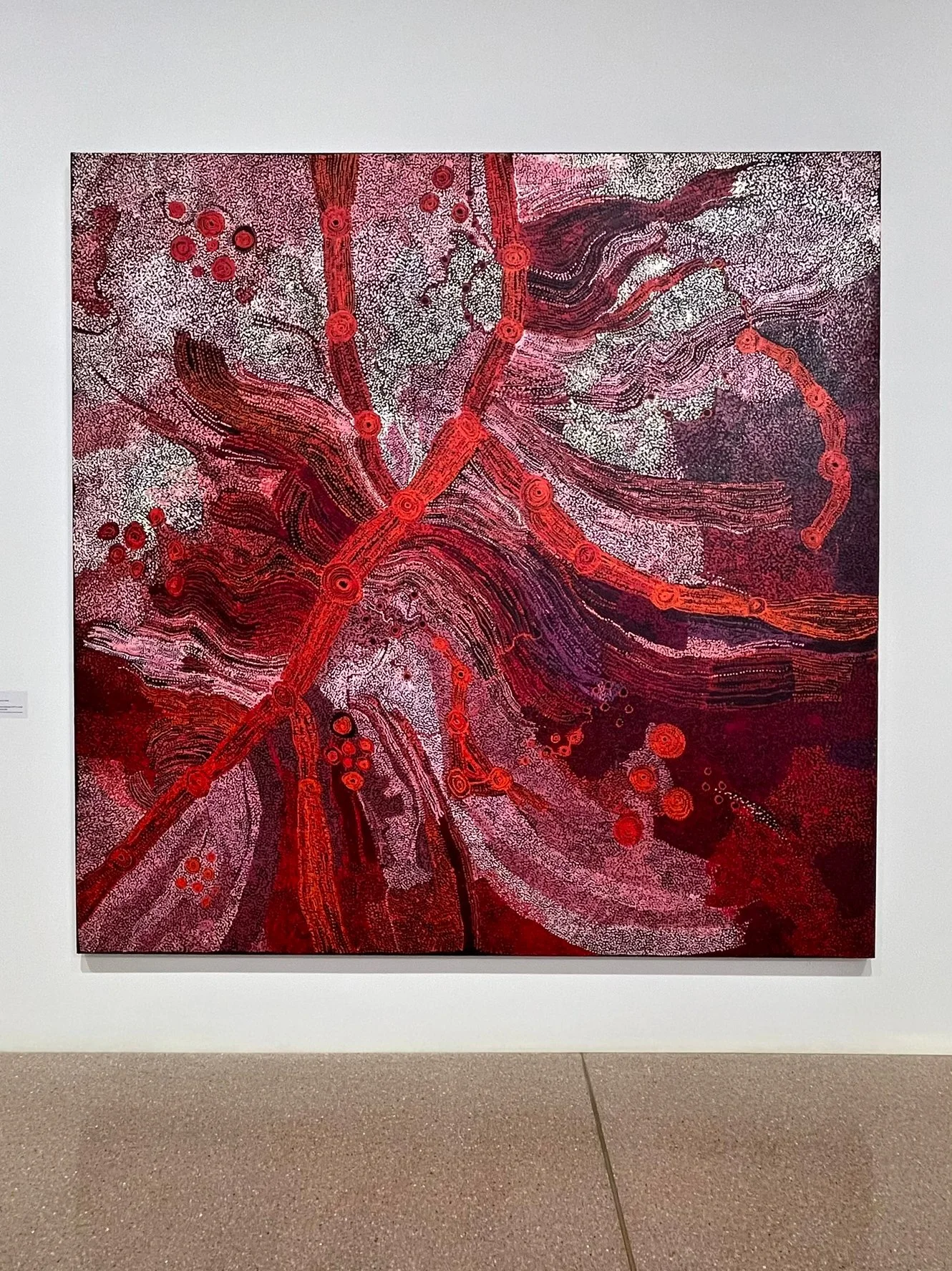
Sylvia Ken (Pitjantjatjara people), Seven Sisters, 2022. National Gallery of Australia.
Rather than viewing Indigenous Australian art through a single lens, Ngura Puḻka embraces the remarkable diversity of artistic practice found across the continent. Although the Western Desert movement features prominently, distinct regional styles, materials and cultural traditions unfold throughout the galleries, reminding visitors that Indigenous Australian art is not a singular movement but a rich and evolving collection of individual voices, each shaped by its own Country, language and history. Similarities emerge from gallery to gallery, but so too do profound differences, encouraging visitors to appreciate both the shared cultural foundations and the unique perspectives of each artist.
Equally memorable were the conversations the exhibition inspired. While standing before one of the exhibition's monumental paintings, I found myself talking with another visitor before we were joined by a third who had spent considerable time travelling through Central Australia. What began as a discussion about the composition soon evolved into a broader conversation about Country itself. As aerial photographs of the desert appeared on a mobile phone, we spoke about how features that can appear abstract to many viewers often reflect an intimate understanding of the landscape. Knowledge of waterholes, seasonal food sources, travel routes and ceremonial songlines represented far more than geography. They embodied generations of accumulated knowledge that enabled people to move safely across some of the harshest environments on earth, where knowing the location of permanent water or reliable food could mean the difference between life and death. Standing before the painting, it became clear that these works are not simply representations of Country. They are expressions of cultural memory, knowledge and lived experience that continue to connect people with place.
Another defining characteristic of Ngura Puḻka is the way it moves effortlessly between collective and individual artistic practice. Throughout the galleries, visitors encounter remarkable collaborative works created by family groups and communities, where multiple artists contribute to a single canvas, each bringing their own knowledge, style and connection to Country. These large-scale paintings speak to a tradition in which cultural knowledge is shared rather than owned, reinforcing the importance of community, kinship and collective responsibility. Their significance has increasingly been recognised within Australia's most prestigious art prizes. In recent years, collaborative First Nations works have become an important presence in the Wynne Prize, reflecting a broader appreciation that some of the most compelling representations of the Australian landscape emerge not from a single artistic voice, but from the shared knowledge and lived experience of families and communities.
Alongside these collaborative works are extraordinary individual masterpieces that reveal the distinctive visual language of some of Australia's most celebrated Indigenous artists. Sylvia Ken's Seven Sisters first attracted national attention when an earlier version won the Wynne Prize in 2019. The 2022 painting exhibited in Ngura Puḻka is among the exhibition's most commanding works. Composed of intricate concentric forms, sinuous pathways and finely articulated dotting, the painting traces the ancestral Seven Sisters Tjukurpa across Country. To many visitors it initially appears almost aerial in perspective, yet the work expresses something far more profound than a landscape viewed from above. It visualises relationships between places, journeys and ancestral knowledge accumulated over countless generations, transforming Country into a living expression of story, memory and cultural continuity. The painting demonstrates that the profound connection to Country expressed through collaborative practice can be conveyed with equal power through the vision of a single artist.
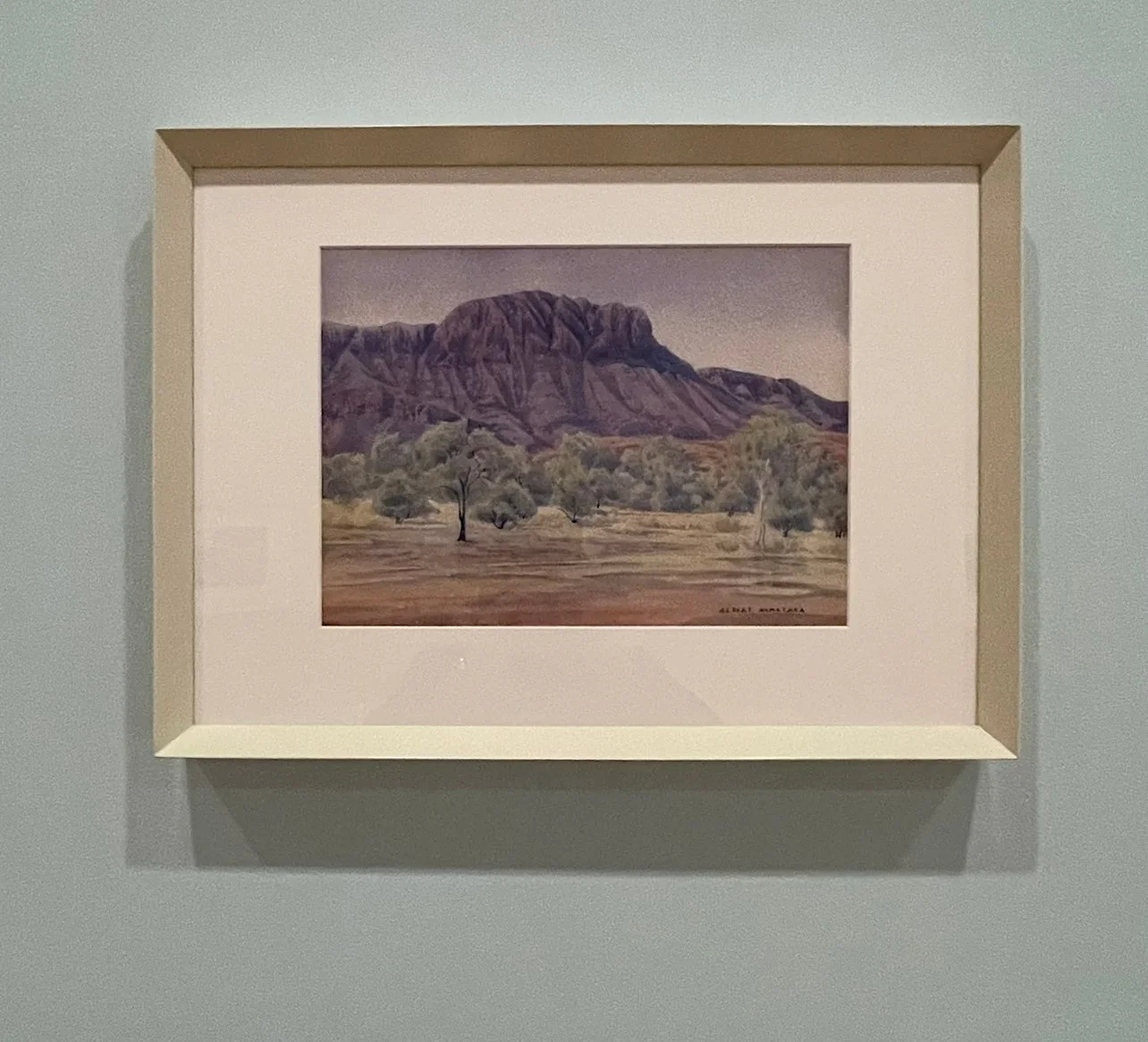
Albert Namatjira (Western Arrarnta people), Central Australian landscape, c.1944. Watercolour over pencil on paper. National Gallery of Australia.
Experiencing these works together reinforces that there is no single way of representing Country. Whether created collectively or by a single artist, each work reflects a profound connection to place, culture and ancestry, while revealing the remarkable diversity that exists within contemporary Indigenous Australian artistic practice.
In contrast to the vast canvases that dominate much of the exhibition, I found myself repeatedly drawn back to the intimate watercolours of the Hermannsburg School. Their modest scale demands a different kind of attention. Where the larger works announce themselves from across the gallery, these quiet paintings reveal their beauty gradually, rewarding patience and close observation. The enduring legacy of Albert Namatjira is unmistakable, not simply through his extraordinary achievements as an artist, but through the generations of painters who continued to interpret the Central Australian landscape through the distinctive Hermannsburg watercolour tradition. It is perhaps inevitable that these smaller works become visually overshadowed by the immense contemporary canvases surrounding them. Yet this reflects a broader tendency throughout art history, where scale has often shaped the way viewers perceive significance. Standing before these delicate landscapes, I was reminded that artistic power is not always measured in metres. Sometimes it is found in restraint, subtlety and an artist's ability to capture the quiet rhythms of Country with remarkable economy.
As I continued through the exhibition, I found myself returning to several works more than once. It is often said that the best artworks reveal something new with each viewing, and this was certainly the case here. Some captivated through their immense scale, others through the intricacy of their execution, while a handful possessed a quieter presence that gradually unfolded the longer I stood before them. Although each artist approached Country in a deeply personal way, they all shared an extraordinary ability to communicate stories, histories and relationships that extend far beyond the painted surface.
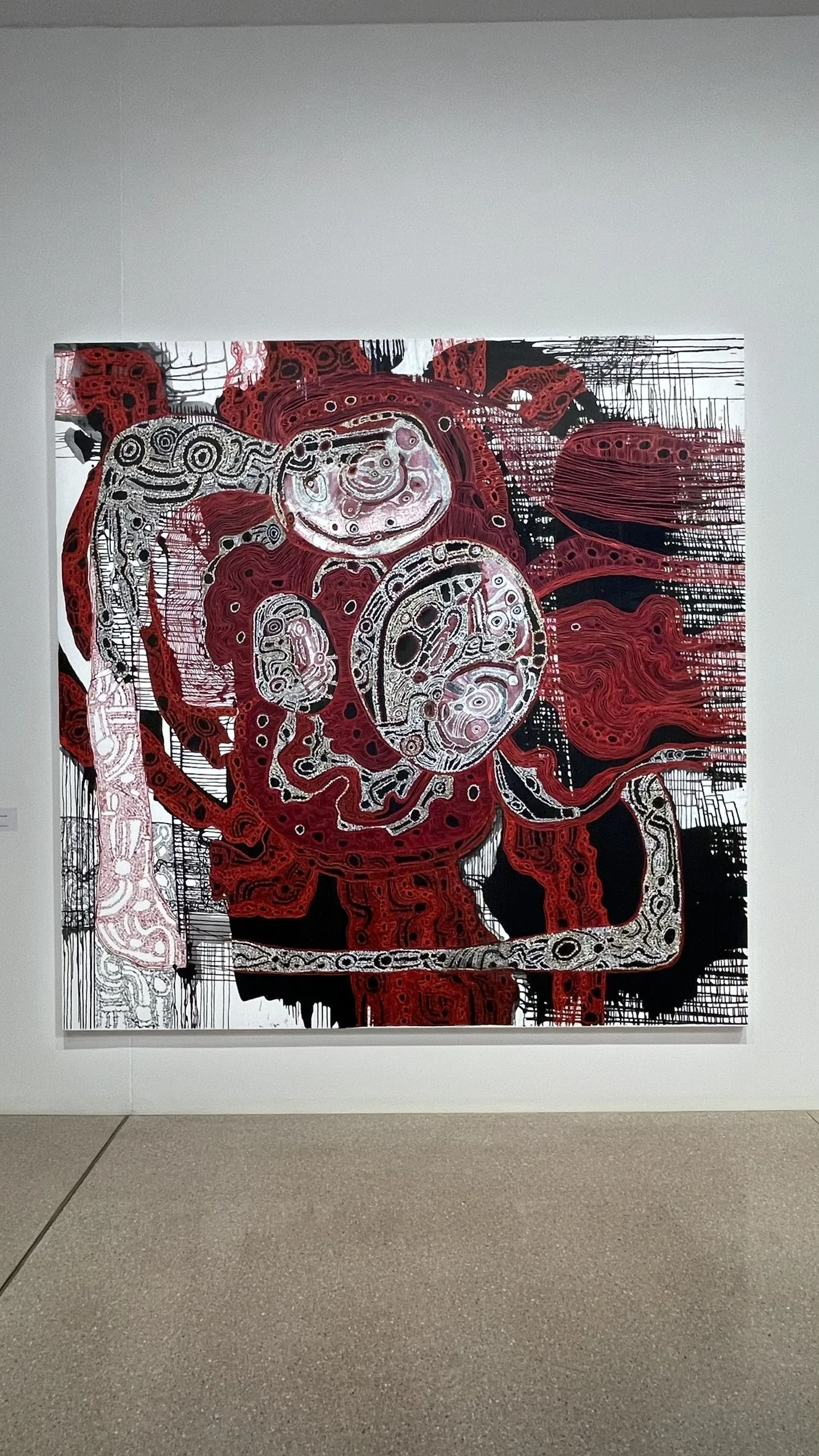
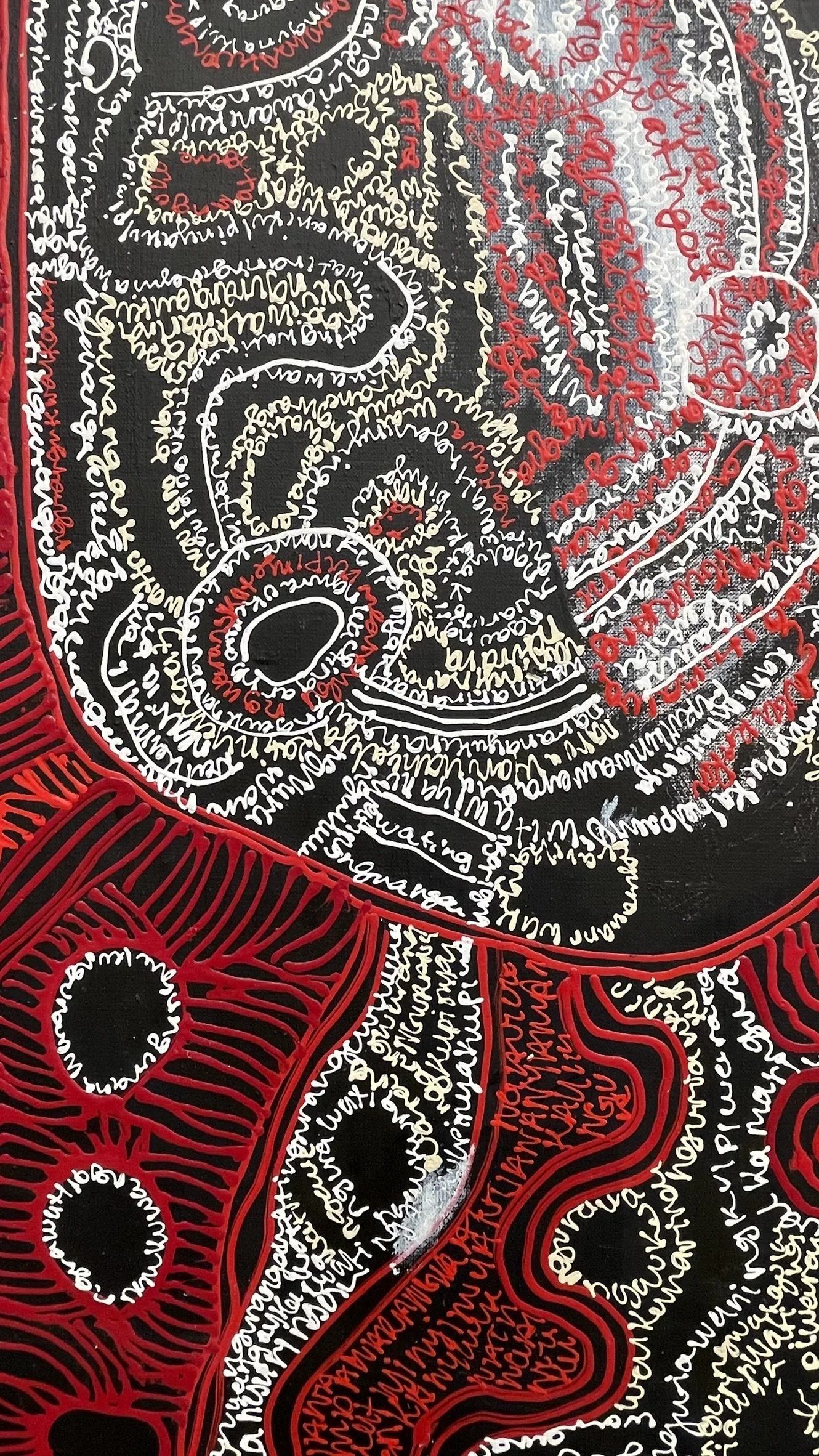
Among the works that lingered most in my mind was Inma (2022) by Zaachariaha Fielding. At first glance, the painting feels unmistakably contemporary. Epic passages of black, white and crimson move confidently across the linen, while raised lines of paint create a richly textured surface that shifts constantly as light moves across it. On closer inspection, however, the work begins to reveal itself differently. Fielding incorporates handwritten Pitjantjatjara throughout the composition, allowing language itself to become another material of the painting. Rather than existing simply as something to be read, the text becomes mark-making, rhythm and cultural memory, anchoring an unmistakably contemporary visual language firmly within Aṉangu culture. It is a painting that demonstrates tradition not as something fixed in the past, but as something capable of continual renewal. Fielding honours inherited Tjukurpa and the visual language of Country while confidently extending them into a distinctly contemporary practice.
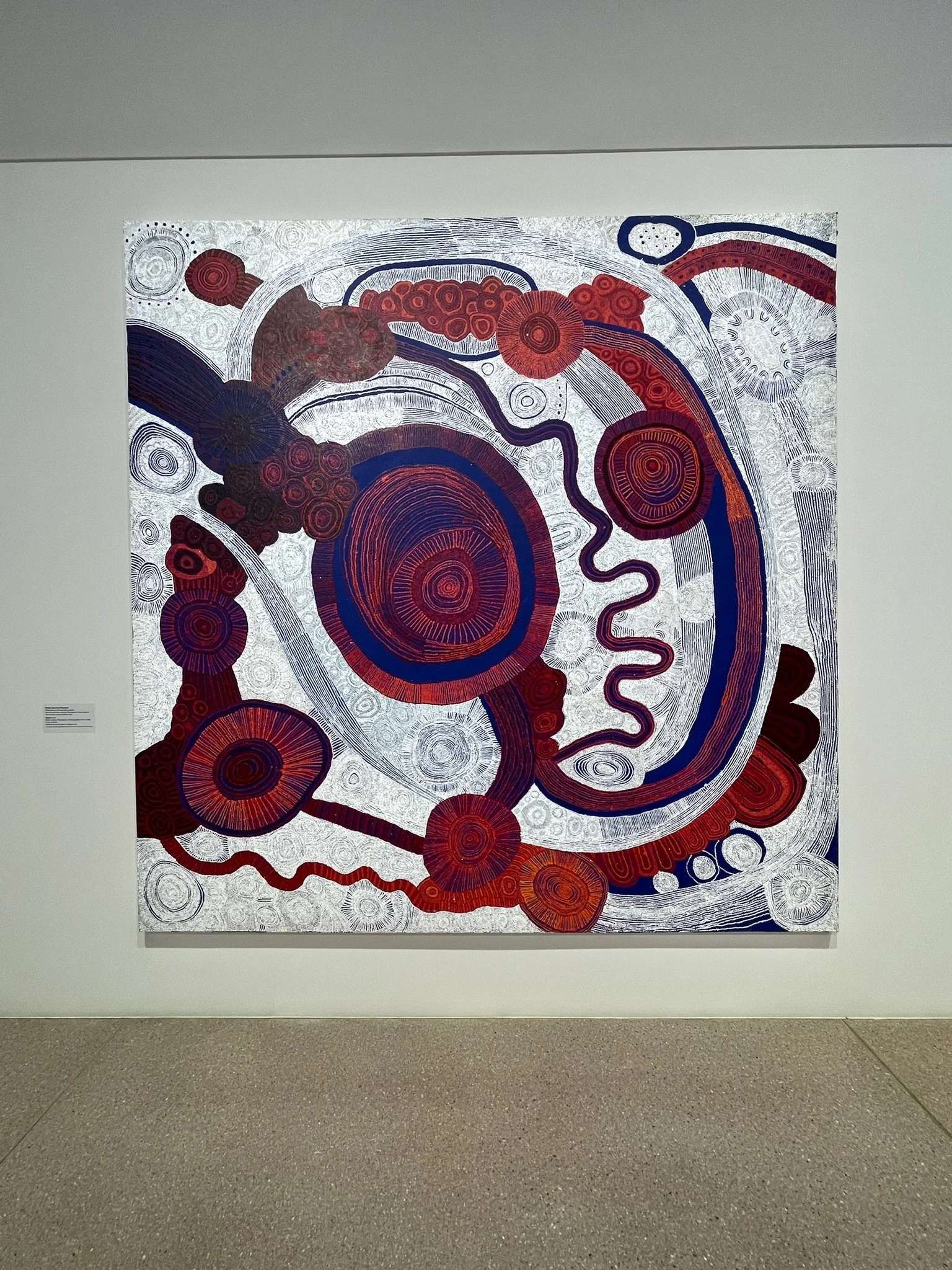
If Fielding's work demonstrated one direction contemporary Indigenous painting is taking, Betty Kuntiwa Pumani's Antara (2022) offered a very different experience. The immense canvas immediately commands attention through its bold fields of deep crimson and brilliant white, punctuated by concentric circles, winding pathways and densely worked passages of dotting. Standing before the work, the composition initially appears almost abstract, yet its rhythms slowly begin to suggest movement across a vast landscape. As with many of the strongest paintings in the exhibition, the longer I remained in front of it, the more its visual complexity revealed itself.
Reading Pumani's accompanying text transformed my understanding of the work. Antara is described as a sacred place for Aṉangu, where numerous Tjukurpa stories intersect. It is a place associated with ceremony, where women performed imaku pakani, a dance connected with harvesting bush foods while passing on practical knowledge about finding water, trees, witchetty grubs and the resources necessary for survival. With that context, the painting ceased to be simply an extraordinary formal composition. It became a living expression of place, memory and knowledge, where ceremony, landscape and survival exist as inseparable parts of Country. The painting is not concerned with depicting what the land looks like, but with expressing what the land knows.
Nearby, one of the exhibition's most memorable works expanded these same ideas on an extraordinary scale. Ngura Puḻka – Epic Country (2022), created by the APY Women's Regional Collaborative, stretches across the gallery wall as a remarkable collective achievement by eleven senior women artists from communities throughout the APY Lands. While each artist's individual visual language remains recognisable, no single contribution dominates the composition. Instead, the painting unfolds as a seamless conversation between different hands, experiences and cultural knowledge. Patterns emerge, dissolve and reappear across the vast surface, inviting the viewer to wander slowly through the work rather than absorb it in a single glance.
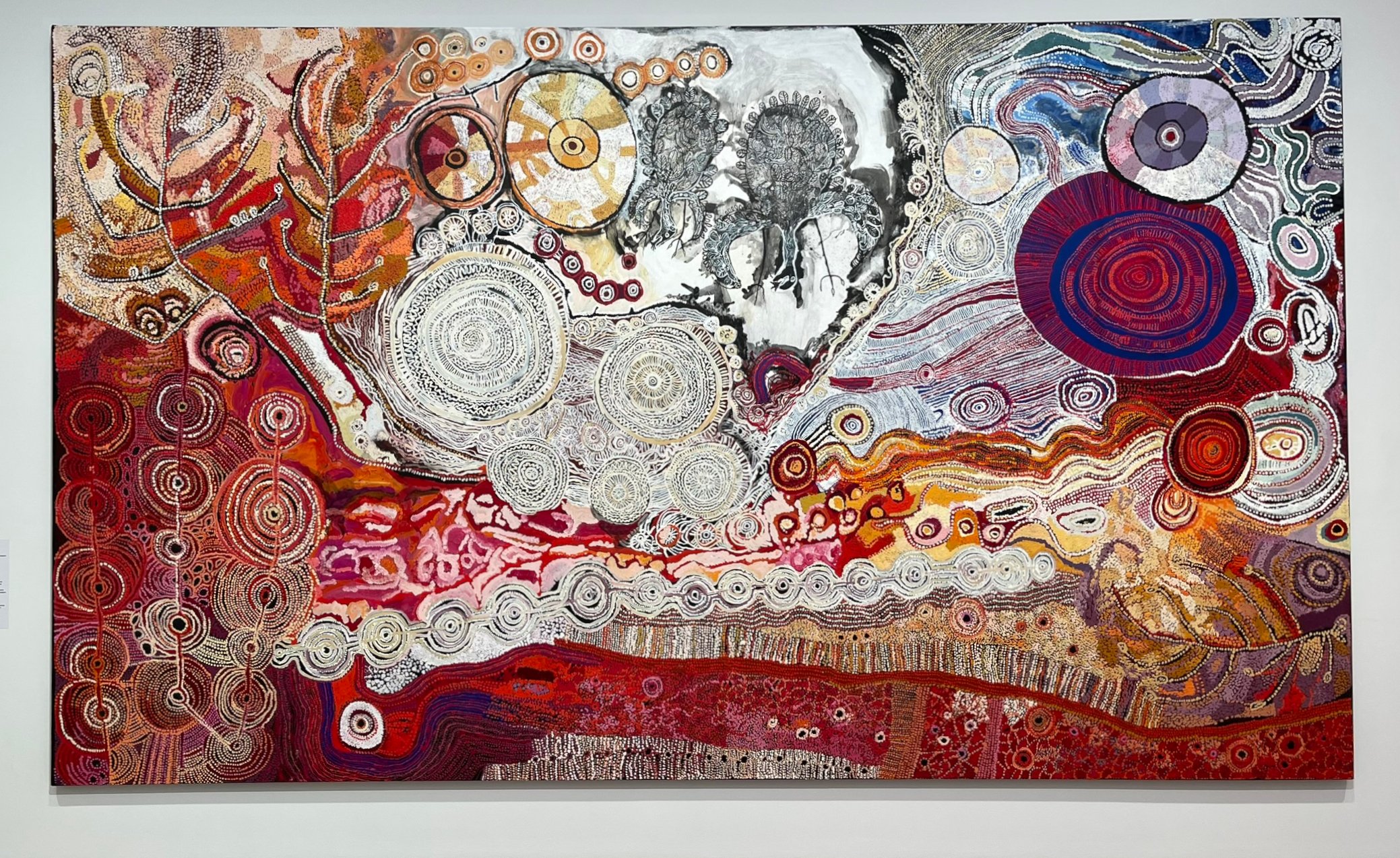
APY Women's Regional Collaborative,Ngura Puḻka – Epic Country, 2022. Synthetic polymer paint on Belgian linen. Created by Angkuna Baker, Maringka Burton, Betty Chimney, Kunmanara (Nellie Ngampa) Coulthard, Tuppy Goodwin, Illuwanti Ken, Sylvia Ken, Betty Muffler, Betty Kuntiwa Pumani and Puna Yanima between Indulkana and Mimili (APY Lands) and Tarntanya/Adelaide, South Australia.
Standing before this expansive collaborative painting, I found myself thinking again about the conversation I had shared earlier in the exhibition. We had spoken about aerial views of the desert, about waterholes, travel routes and ceremonial pathways that can appear abstract until understood through the knowledge of those who belong to that Country. Looking across this immense canvas, those ideas suddenly felt tangible. The painting does not describe the landscape in the Western sense. It records relationships between places, stories, ceremony and people, preserving knowledge accumulated over countless generations through a shared act of painting.
By this point it had become clear that Ngura Puḻka: Epic Country was doing far more than presenting outstanding works from the National Gallery of Australia's collection. It demonstrated the extraordinary breadth of contemporary Indigenous Australian art while refusing to separate innovation from tradition. Artists such as Zaachariaha Fielding show that inherited cultural knowledge continues to inspire bold new forms of expression, while painters such as Betty Kuntiwa Pumani reaffirm the enduring power of established visual languages grounded in Country and ceremony. Alongside them, the APY Women's Regional Collaborative reminds us that some of the most profound artistic achievements emerge not from individual authorship, but through collective knowledge shared across families, communities and generations.
For me, this became the exhibition's greatest achievement. I arrived having spent weeks immersed in provenance research, market evidence and valuation reports, thinking primarily about artworks as individual objects. I left with a renewed appreciation that every painting exists within a much larger cultural framework that no catalogue entry or valuation can fully capture. Market value will always remain an important part of my profession, but exhibitions such as Ngura Puḻka are a reminder that an artwork's deepest significance often lies elsewhere. It resides in the knowledge it carries, the histories it preserves and the enduring connection between people and Country that continues to shape contemporary Indigenous Australian art.
Ngura Puḻka: Epic Country succeeds because it rewards patience. It asks visitors to slow down, to look again and to recognise that the stories embedded within these works reveal themselves gradually. Long after leaving the gallery, it was not simply the scale of the paintings or the brilliance of their execution that remained with me, but the remarkable diversity of voices brought together under one roof. It is an exhibition that deepens not only an appreciation of Indigenous Australian art, but also an understanding of the living cultures from which it continues to emerge.
Ngura Puḻka: Epic Country is on display at the National Gallery of Australia, Level 1, Galleries 2–7, Parkes Place East, Parkes ACT, until 23 August 2026. Admission is free.